
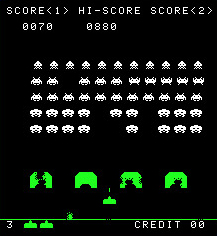
Competitive Gaming’s Roots: How ’80s Arcade Leaderboards Created the Casino Movement
The release of the iconic arcade game Space Invaders in 1978 led to a Golden Age of video games. The title became a global phenomenon, making headlines across the world as crowds flocked to arcades to try their hand at this cultural craze. Well-known titles such as Pac-Man, Donkey Kong, and Street Fighter followed as the industry boomed, generating billions of dollars in revenue. Arcade games represented the very latest in technology...
How AI Is Bringing the 1980s Back to Life
There is something about the 1980s that refuses to disappear. Neon colors, arcade games, cassette tapes, mall culture, synthesizers, big hair, VHS static, Saturday morning cartoons, and movie posters painted with impossibly dramatic skies all continue to influence pop culture decades later. Now, artificial intelligence is giving people a completely new way to revisit the decade. AI image generators, music tools, video software, and...

Common Color Game Mistakes: What Do Results and Patterns Really Mean?
Color Game is easy to understand. You choose a color, the dice produce a result, and the outcome determines whether your selection matches. But once several rounds have passed, things can get a little more complicated. A few Red results in a row might look like a streak. A color that has not appeared for several rounds might suddenly feel “due.” After a win, it can also be tempting to believe you have figured out a reliable approach....

How the 80s Arcade Taught Us to Pay by the Minute – and Why the Habit Never Left
Go to any arcade in 1982, and there was always the same routine every time: you paid a quarter and played for some minutes – perhaps for several lives, if you were good enough – and that was it, as you searched for another quarter in your pocket. There wasn’t any particular name for it at the time. That’s just how Pac-Man functioned. Forty years later, the same sequence – paying some money and playing for some short while – is...
From Layaway to One-Click: 40 Years of How We Pay
Paying for something used to take effort. You planned for it, saved for it, and sometimes waited weeks before the item was actually yours. That friction shaped how people thought about money — every purchase carried a small cost in time and attention, which meant most people felt the weight of a decision before they made it. That weight has mostly disappeared. Buying something now can take less than a second, and the money involved...
